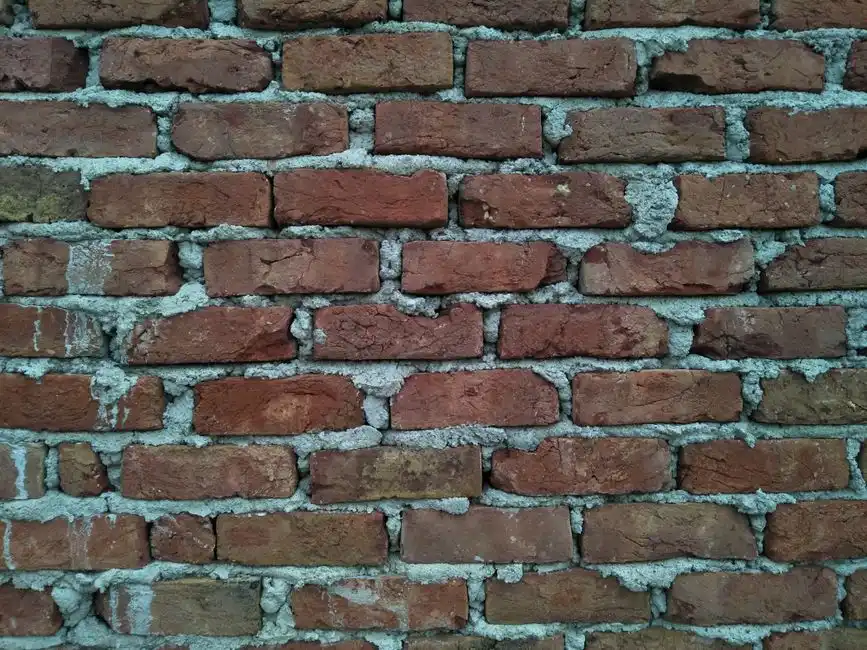
Chimney mortar joint damage in Franklin Town, Massachusetts shows up as crumbly, recessed, or cracked mortar between the bricks - and once water gets into those gaps, every freeze-thaw cycle widens them. You can spot it yourself by running a screwdriver along the joints: if the mortar flakes off or the tip sinks in more than about a quarter inch, the joint has failed. The rest of this post walks through what each stage looks like, why New England weather accelerates it, what repair costs in 2026, and when a joint problem has gone past the point where tuckpointing alone will fix it.
What chimney mortar joint damage looks like
Chimney mortar joint damage is the breakdown of the mortar that bonds brick to brick - the gray or tan lines you see between each course of masonry. That mortar is softer than the brick on purpose. It is meant to be the sacrificial layer, flexing with the chimney as it heats and cools so the brick does not have to.
When the mortar gives out, the brick starts taking the load. That is when a repairable joint problem turns into a rebuild.
Here is what to look for, in rough order of severity:
- Hairline cracks running vertically or in a stair-step pattern along the joints. Often the first visible sign.
- Recessed joints - the mortar sits noticeably behind the face of the brick instead of flush with it.
- Sandy or gritty texture on the joint surface. Rub it with a gloved finger; if grains come off, the binder is gone.
- Crumbling or missing mortar in patches, usually on the side of the chimney that takes the most weather.
- Spalling brick faces - the front of the brick pops off in flakes because water trapped behind it is freezing and expanding.
- White chalky staining (efflorescence) on the brick. That is mineral salt pushed out by moisture moving through the masonry.
If you are seeing the last three items on that list, you are past the early-warning stage. The chimney is actively taking on water.
Why Franklin Town chimneys deteriorate faster than you think
Franklin Town sits in a pocket of Massachusetts that swings hard between wet and freezing. Our winters routinely drop into the single digits, and our springs and falls cycle above and below 32°F for weeks at a time. That freeze-thaw rhythm is what kills mortar.
Water soaks into a hairline crack during a mild afternoon. Overnight it freezes and expands roughly 9 percent in volume. By morning the crack is wider. Repeat that 40 or 50 times in a season and a joint that was fine in October is falling apart by March.
Two local factors make it worse:
- Age of housing stock. A large share of homes around Franklin Town center, the Dean College area, and the older streets off East Central were built before 1960. Lime-based mortar from that era is softer and more porous than modern Portland mixes, and it wears out on a predictable schedule.
- Tree cover and shade. Chimneys on the north or east side of a house, especially under mature oaks, stay damp longer after rain. Damp masonry plus cold nights equals rapid joint failure.
We see this pattern constantly when we are called out for chimney repair near me in Franklin Town, Massachusetts - the homeowner noticed nothing in summer, then found mortar on the roof in February.
How to inspect your own chimney in 15 minutes
You do not need a ladder to catch most early-stage joint damage. You need binoculars, a screwdriver, and daylight.
From the ground
- Stand back 30 to 40 feet and look at the chimney with binoculars. Check all four sides, not just the one facing the street.
- Look for dark streaks, white staining, or green algae on the brick - all signs of chronic moisture.
- Check the top of the chimney. If the crown (the concrete cap on top) is cracked or flaking, water is running straight down into the joints below it.
- Look at the flashing where the chimney meets the roof. Lifted or rusted flashing sends water into the masonry from the side.
Up close, if you can safely reach it
- Press a flathead screwdriver into a mortar joint at a 45-degree angle. Healthy mortar resists. If the tip sinks in more than a quarter inch or the mortar crumbles, that joint has failed.
- Test joints on at least three sides of the chimney, at the top, middle, and bottom. Damage is rarely uniform.
- Tap a few bricks with the screwdriver handle. A hollow sound means the brick has separated from the mortar behind it.
Write down what you find and where. That record is genuinely useful when you call someone, and it tells you whether the problem is one bad section or the whole stack.
How much does chimney mortar joint repair cost in Franklin Town?
Typical 2026 pricing in the Franklin Town area runs $600 to $1,200 for spot tuckpointing on a small section, and $2,000 to $5,500 for repointing an entire chimney, depending on height, access, and how much brick needs replacing at the same time.
Here is how that breaks down:
- Spot repair (a few square feet): $600-$1,200. Usually a single bad face or the top three or four courses.
- Full chimney repointing: $2,000-$5,500. Grinding out and replacing every joint on the stack.
- Repointing plus brick replacement: add $15-$40 per brick for spalled or cracked units.
- Scaffolding or roof access surcharge: $300-$900 on tall or steep-pitch chimneys.
- Crown repair or replacement: $400-$1,500, and worth doing at the same time - a bad crown will undo fresh mortar in two winters.
The cost gap between spot repair and full repointing is the whole argument for catching it early. A $900 tuckpointing job in October is a $4,000 rebuild if you wait until the brick starts spalling. For the masonry side of that work, our chimney masonry repair in Franklin Town, Massachusetts team handles both the joint work and any brick that has already failed.
Common mistakes that make mortar damage worse
The single most expensive mistake is sealing a breathing chimney with the wrong product. Masonry has to move moisture out. Anything that traps it in causes more damage than the crack you were trying to fix.
What we see homeowners do, and why it backfires:
- Painting the chimney with standard exterior paint. Paint seals the surface. Water that gets in behind it cannot get out, so it pushes the brick face off instead. This is how a $900 repointing job becomes a $6,000 rebuild.
- Using the wrong mortar mix. Modern Type S or N Portland mortar is harder than the brick in pre-1960 chimneys. It does not flex, so the brick cracks instead. Older Franklin Town chimneys need a softer, lime-rich mix matched to the original.
- Smearing mortar over the surface instead of grinding out the joint. This is called pointing over, and it looks fine for one season. The new mortar sits on top of failed mortar and pops off in the first hard freeze.
- Ignoring the crown and flashing. Repointing a chimney with a cracked crown is like fixing a wall with the window open. Water keeps coming in from above.
- Waiting for spring. Every freeze between now and April widens the crack. Mortar repair done in fall, before the ground freezes, lasts far longer.
If you are not sure whether a joint needs repointing or a full rebuild, a chimney inspection service in Franklin Town, Massachusetts will tell you in about an hour. That is cheaper than guessing.
How often should chimney mortar joints be checked in Franklin Town?
Check the joints once a year in early fall, and again after any winter that produced repeated freeze-thaw cycles. In this climate, an annual look is the minimum - not a five-year item.
Pair that with a professional inspection every 12 months if you burn wood, or every 24 months if the fireplace is decorative. The fall check matters most because it is your last chance to seal things up before the first hard freeze, which around here usually lands in late October or early November.
If you want that on a schedule you do not have to think about, our chimney maintenance in Franklin Town, Massachusetts program includes the joint inspection, a cleaning, and a written report on what needs attention before winter.
When to call a professional
Call someone when the screwdriver sinks in more than a quarter inch, when you can see missing mortar from the ground, or when any brick face has flaked off. Those are the three points where DIY patching stops working.
Also call if the chimney is taller than one story, if the roof pitch is steep, or if the damage is on the side you cannot safely reach. Falls from roofs and ladders are the reason this trade has a safety record worth respecting, and no mortar joint is worth a hospital visit.
At FixiqoWave, we grind out the failed joints to the right depth, match the mortar mix to the age and composition of your chimney, and repoint in lifts so the mortar cures properly instead of shrinking and cracking. We also check the crown, flashing, and cap while we are up there, because those three are usually feeding the problem. You get a clear price before we start and a chimney that is ready for winter when we leave.
Frequently Asked Questions
What does chimney mortar joint damage look like in Franklin Town?
It looks like gray or tan mortar that has receded behind the brick face, cracks running in stair-step patterns, and gritty sand falling onto the roof. In later stages you will see missing mortar patches, white chalky staining, and brick faces flaking off. Check the north and east sides first - they stay damp longest here.
How much does chimney mortar joint repair cost in Franklin Town MA?
In 2026, spot tuckpointing runs $600 to $1,200 for a small section. Full chimney repointing runs $2,000 to $5,500 depending on height and access. Add $15 to $40 per brick if any brick needs replacing, and $400 to $1,500 if the crown also needs work.
Can I fix chimney mortar joint damage myself in Franklin Town, Massachusetts?
You can handle a small patch at ground level if you grind the joint out properly and match the mortar mix. Above one story, on a steep roof, or on any pre-1960 chimney, the risk of falls and the risk of using the wrong mix both argue for hiring it out. Bad DIY mortar often causes more damage than the original crack.
How often should chimney mortar joints be checked in Franklin Town?
Once a year in early fall, plus a look after any winter with heavy freeze-thaw cycling. If you burn wood regularly, add a professional inspection every 12 months. Decorative fireplaces can go 24 months between inspections. Fall is the deadline that matters - you want repairs done before the first hard freeze.
Does chimney mortar joint damage get worse in winter?
Yes, and fast. Water enters a hairline crack, freezes overnight, and expands about 9 percent. That widens the crack, which lets in more water the next time it rains. A Franklin Town chimney can go from minor joint wear in October to visible missing mortar by March.
Get help with Chimney repair in Franklin Town
If your joints are crumbling, recessed, or letting water in, we can grind them out and repoint them properly before the first freeze - and check the crown, flashing, and cap while we are on the roof.
Call FixiqoWave at (844) 803-2151 for a same-week assessment of your chimney mortar joint damage in Franklin Town, Massachusetts.